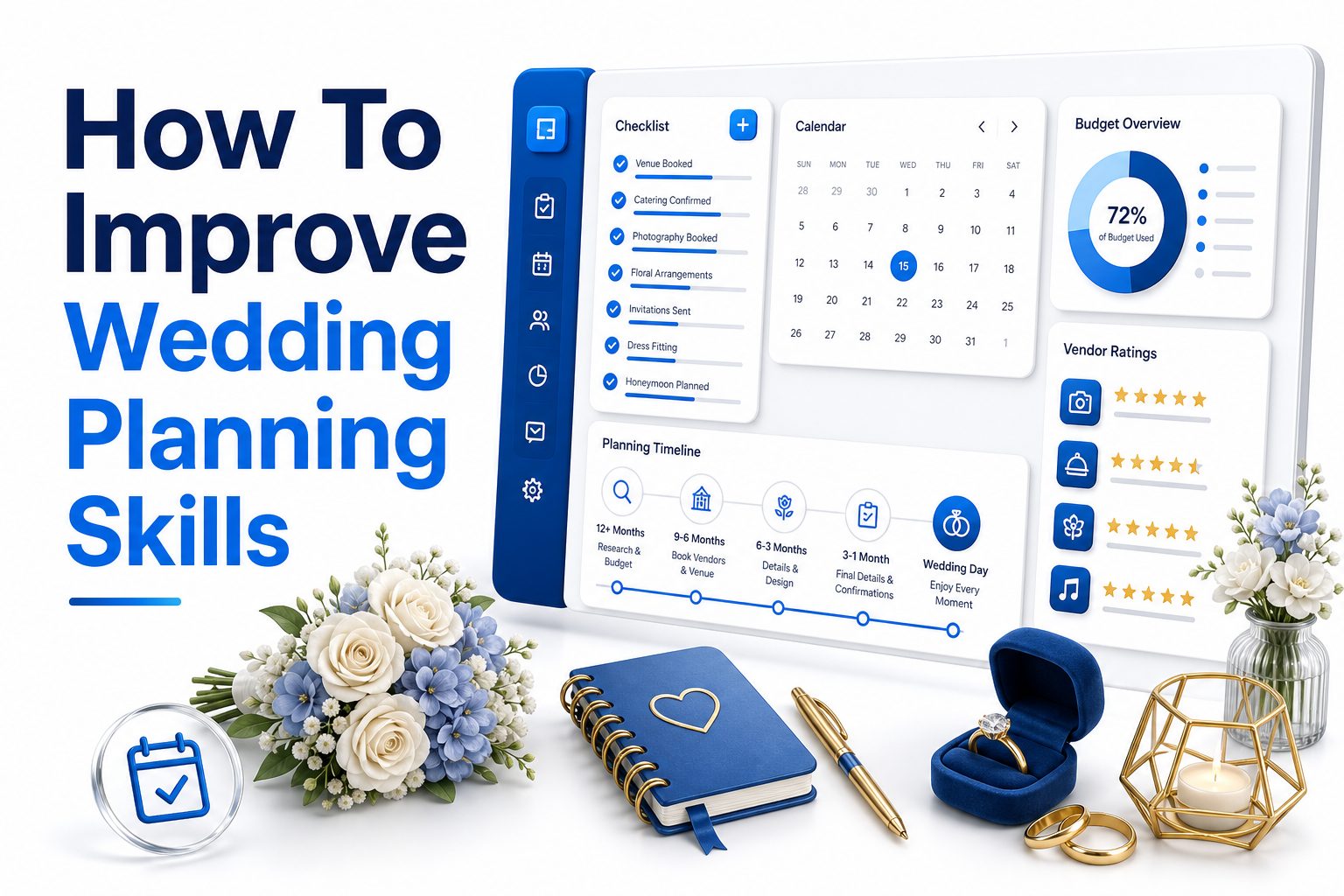
Planning a wedding well takes more than good taste and a love for beautiful details. It requires organization, calm decision-making, strong communication, budget awareness, and the ability to manage many moving parts without losing sight of the couple’s vision. Whether you are planning your own wedding, helping a friend, or building a career as a wedding planner, skill matters.
Learning how to improve wedding planning skills means building habits that help you think clearly, prepare early, and solve problems before they become stressful. The best planners are not simply creative; they are reliable, practical, and deeply attentive to people. They know how to listen, compare options, manage expectations, and keep the event moving smoothly. This article breaks down the core skills that make wedding planning easier, more professional, and far less overwhelming.
Build a Strong Planning Foundation
Every successful wedding starts with a clear planning foundation. Before choosing flowers, venues, or menus, you need to know the couple’s priorities, budget range, guest count, style preferences, and non-negotiables. These early details guide every decision that follows and reduce confusion later.
A strong foundation also includes a central planning system. Use one place for contracts, deadlines, payment schedules, guest lists, vendor notes, and design ideas. When information is scattered across texts, notebooks, and email threads, small details get missed and stress grows quickly.
Improve Your Organization System
Organization is one of the most important wedding planning skills because weddings involve hundreds of small tasks. A planner needs to track deadlines, deposits, RSVPs, fittings, tastings, rentals, transportation, and ceremony details without relying on memory alone.
Choose tools that fit your working style. A spreadsheet, project management board, digital calendar, or wedding planning app can all work well. The key is consistency. Update your system after every decision, call, and vendor change so it remains useful throughout the process.
Planning Essentials Checklist
- Create a master wedding timeline before booking major vendors
- Keep all contracts and invoices in one labeled folder
- Track deposits, balances, and due dates carefully
- Maintain a shared guest list with meal choices and RSVP status
- Schedule regular planning check-ins with the couple
- Confirm every vendor detail in writing
- Build a final week checklist for setup, payments, and logistics
Strengthen Budget Management Skills
Budget management separates confident planners from overwhelmed ones. A wedding budget is not just a total number; it is a decision-making tool. Break the budget into categories such as venue, catering, attire, photography, entertainment, decor, stationery, and emergency funds.
To improve, learn average wedding costs in your market and compare quotes carefully. A low price is not always the best value, and a high price does not always mean better service. Good planning means helping clients spend where it matters most.
Learn to Prioritize Wedding Costs
Couples often begin with a wish list that exceeds their budget. Your role is to help them decide what has the greatest emotional and practical value. For some, that may be food and music. For others, it may be photography, floral design, or guest experience.
Use a priority ranking system during early planning. Ask the couple to name their top three must-haves and three areas where they are willing to simplify. This makes later budget conversations easier and keeps spending aligned with what they truly care about.
Wedding Budget Comparison Table
Category | High Priority Approach | Cost-Saving Approach
Venue | Full-service venue with rentals included | Community space or off-peak date
Flowers | Custom ceremony and reception installations | Seasonal blooms and smaller centerpieces
Catering | Plated dinner with premium menu | Buffet, brunch, or limited menu
Photography | Full-day coverage with second shooter | Shorter coverage with key moments
Stationery | Custom printed invitation suite | Digital RSVP and simpler printed invites
Develop Clear Communication Habits
Wedding planning depends on communication. Couples, families, vendors, venue teams, and wedding parties all need accurate information at the right time. Good communication prevents mistakes, protects relationships, and helps everyone feel more confident.
Be direct, warm, and specific. Instead of saying, “I’ll check on that soon,” say, “I’ll confirm with the venue by Thursday and send you the update by Friday afternoon.” Clear timelines show professionalism and reduce unnecessary follow-up messages.
Set Expectations Early
Many planning problems begin when expectations are vague. Couples may assume a vendor handles setup, family members may expect decision-making power, or the wedding party may not know when they need to arrive. These gaps create stress close to the wedding day.
Put expectations in writing whenever possible. Share planning timelines, vendor responsibilities, payment deadlines, and decision dates. If you offer planning services, define your scope clearly in your contract so everyone knows what is included and what requires extra support.
Improve Vendor Research and Selection
Vendors shape the quality of the wedding day, so choosing them wisely is a major skill. A planner needs to evaluate reliability, style, pricing, communication, experience, reviews, and contract terms before making recommendations or bookings.
Do more than scan social media. Review full galleries, sample menus, insurance details, cancellation policies, and past client feedback. Ask vendors how they handle delays, weather issues, staffing shortages, and setup challenges. Their answers reveal how prepared they are.
Vendor Evaluation Tips
- Review recent work, not only highlight images
- Ask about backup plans and emergency procedures
- Compare full proposals instead of headline prices
- Check response time and communication quality
- Read contracts before paying deposits
- Confirm insurance, permits, and venue requirements
- Keep a short list of trusted backup vendors
Practice Timeline Creation
A wedding timeline is more than a schedule. It is the operational plan for the entire day. It should include vendor arrivals, setup windows, photography blocks, ceremony cues, transportation times, meal service, speeches, dances, and breakdown responsibilities.
To improve your timeline skills, work backward from fixed moments. Ceremony time, sunset, venue access, and catering service usually shape the day. Add buffer time between major events because hair, photos, transport, and family groupings often take longer than expected.
Build Realistic Day-Of Schedules
A common planning mistake is creating a timeline that looks good on paper but fails in real life. If the couple has a large wedding party, family portraits need more time. If the venue has limited access, setup must be carefully staged.
Ask vendors for their timing needs before finalizing the schedule. Photographers, caterers, hair stylists, musicians, and venue managers all have practical requirements. A strong wedding planner combines those needs into one realistic timeline that everyone can follow.
Sharpen Problem-Solving Skills
Even the best-planned weddings can face surprises. Weather shifts, late transportation, missing items, vendor delays, wardrobe issues, and emotional tension can all happen. Strong planners stay calm because they have prepared options before the pressure arrives.
Build problem-solving skills by thinking in scenarios. What happens if the ceremony moves indoors? Who handles a late guest shuttle? Where are the backup candles, stain remover, sewing kit, umbrellas, and printed contact list? Preparation turns panic into action.
Use Post-Event Reviews to Improve
After each wedding, take notes while the details are fresh. What worked well? Which vendor was excellent? Where did the timeline feel tight? Which family dynamic needed more preparation? This review helps you improve faster than experience alone.
If you are planning professionally, create a simple post-event form for yourself. Track lessons on timing, vendor performance, setup details, communication, and budget accuracy. Over time, these notes become a valuable personal playbook.
Common Wedding Planning Problems and Fixes
-
- Problem: Vendor arrival confusion
Fix: Send a final timeline with arrival times, loading details, and contact numbers
-
- Problem: Budget keeps expanding
Fix: Require approval before every new expense and update totals weekly
-
- Problem: Family opinions delay decisions
Fix: Identify final decision-makers at the start of planning
-
- Problem: Timeline runs late
Fix: Add buffers around photos, transportation, and outfit changes
-
- Problem: Missing wedding day items
Fix: Use a packing checklist organized by ceremony, reception, and personal items
Study Wedding Design Principles
Design is not only about choosing pretty colors. A strong wedding design connects the venue, season, attire, flowers, lighting, stationery, table settings, and overall mood. Good design feels intentional instead of crowded or mismatched.
To improve, study real weddings, venue layouts, floral styles, linen textures, lighting effects, and photography composition. Notice why certain events feel polished. Often, the difference comes from restraint, proportion, and repeating a few thoughtful details.
Create Mood Boards With Purpose
Mood boards are useful only when they guide real decisions. Instead of collecting random images, build boards around color palette, floral style, table design, attire, signage, lighting, and venue atmosphere. Each image should serve a planning purpose.
Share mood boards with vendors so everyone works from the same visual direction. Florists, rental teams, stationers, and cake designers can make better recommendations when the design vision is clear. For more ideas, see [Internal Link: Wedding Design Inspiration].
Learn Venue Logistics
A venue can look beautiful and still create planning challenges. Access hours, loading areas, power supply, restroom capacity, parking, noise limits, rain plans, and rental restrictions all affect the wedding experience. Skilled planners study logistics before making commitments.
Visit venues with a practical eye. Ask where vendors unload, where ceremonies move during bad weather, how long setup takes, whether candles are allowed, and what staff will handle. These answers matter as much as the view.
Ask Better Venue Questions
The right questions help prevent expensive surprises. Before signing, confirm what is included in the rental fee, when the couple can access the space, whether cleanup is required, and which vendors must come from preferred lists.
Also ask about floor plans, guest flow, kitchen facilities, lighting, sound limits, insurance, security, and overtime charges. Strong venue knowledge helps you create a realistic plan and protect the couple from last-minute complications.
Venue Planning Facts
- Venue access time affects every vendor’s setup schedule
- Rain plans should be confirmed before invitations are sent
- Preferred vendor lists may limit catering, decor, or entertainment choices
- Noise restrictions can affect music timing and reception flow
- Hidden fees often appear in overtime, cleaning, security, and staffing
- Guest comfort depends on parking, restrooms, temperature, and layout
Improve Negotiation and Contract Review Skills
Negotiation in wedding planning is not about pushing vendors unfairly. It is about clarifying value, matching services to needs, and making sure both sides know what is expected. Respectful negotiation often leads to better packages and fewer misunderstandings.
Read contracts carefully before deposits are paid. Look for payment schedules, cancellation terms, refund rules, overtime rates, setup responsibilities, liability clauses, meal requirements, travel fees, and backup plans. When something is unclear, ask for written clarification.
Protect the Couple’s Interests
A wedding planner should notice risks before the couple does. If a contract lacks arrival times, service details, or weather policies, those gaps can become problems later. Clear agreements reduce stress and protect the wedding investment.
Keep a contract summary for each vendor. Include payment due dates, contact information, included services, setup needs, and final confirmation deadlines. This makes it easier to manage the planning process without rereading long documents every week.
Build Emotional Intelligence
Weddings are emotional events. Couples may feel pressure from family, finances, traditions, and personal expectations. A skilled planner understands that decisions are rarely just about flowers or seating charts; they often carry emotional weight.
Listen carefully before offering solutions. Sometimes a couple needs practical advice, and sometimes they need help sorting priorities. Calm, respectful communication helps people feel heard and makes difficult planning conversations more productive.
Handle Family Dynamics Professionally
Family involvement can be helpful, but it can also complicate planning. Parents may have strong opinions about guest lists, budgets, ceremony traditions, or reception style. A planner needs tact, boundaries, and patience in these conversations.
Clarify who has decision-making authority early. If several people are contributing financially, discuss how decisions will be handled before conflicts appear. This is especially useful for guest counts, cultural traditions, seating plans, and major budget choices.
Soft Skills That Improve Wedding Planning
- Active listening during planning meetings
- Calm responses during stressful moments
- Clear boundaries around decision-making
- Patience with emotional conversations
- Confidence when explaining tradeoffs
- Diplomacy with family members and vendors
- Flexibility when plans need to change
Practice Guest Experience Planning
A beautiful wedding is not successful if guests feel confused, hungry, uncomfortable, or ignored. Guest experience planning focuses on how people move, wait, eat, celebrate, and receive information throughout the event.
Think through the event from a guest’s point of view. Where do they park? How do they find the ceremony? Is there shade, seating, water, clear signage, and enough time between events? Small details make a big difference.
Plan Comfort and Flow
Guest flow is especially important for larger weddings. Bottlenecks can happen at parking areas, bars, buffet lines, elevators, restrooms, coat checks, and photo booths. A planner should spot these issues before the event begins.
Work with vendors to reduce waiting. Add extra bar staff, stagger transportation, place signage clearly, and allow enough time for room transitions. For more event flow ideas, visit [Internal Link: Wedding Guest Experience Planning].
Improve Your Attention to Detail
Wedding planning rewards careful attention. A missed boutonniere, wrong meal count, late payment, or unclear arrival time can create unnecessary stress. Detail-oriented planners use systems, not memory, to keep track of small but important items.
Develop habits that catch mistakes early. Review proposals line by line, compare invoices against contracts, confirm names and dates on stationery, and check quantities for rentals, flowers, meals, favors, and ceremony items before final approval.
Use Repetition to Catch Errors
Rechecking does not mean doubting yourself. It is a professional habit. Review key details at booking, one month before the wedding, two weeks before, and during final confirmations. Each review catches different kinds of issues.
Create standard checklists for common tasks. Over time, you will refine these lists based on real events. This makes your work faster and more accurate, especially when managing multiple weddings or helping several couples at once.
Detail Review Checklist
- Names, dates, and locations on printed materials
- Final guest count and vendor meal count
- Rental quantities for tables, chairs, linens, and place settings
- Ceremony processional order and music cues
- Floral delivery locations and setup notes
- Transportation addresses and pickup times
- Final payments and gratuity envelopes
- Emergency contact list for vendors and key family members
Study Real Weddings and Industry Trends
To improve your planning instincts, study real weddings beyond the photos. Look at timelines, floor plans, budgets, vendor teams, guest counts, weather conditions, and design choices. This helps you connect pretty images with practical planning decisions.
Trends can be useful, but they should not control the wedding. Use them as inspiration while staying focused on the couple’s personality, culture, priorities, and budget. A timeless plan usually comes from good choices, not trend chasing.
Learn From Experienced Professionals
Follow planners, photographers, florists, caterers, venue managers, and rental companies who share practical insights. Pay attention to how they solve problems, communicate expectations, and structure event days. Industry knowledge grows faster when you learn from several roles.
If possible, assist at weddings before leading one. Hands-on experience teaches timing, setup pressure, vendor coordination, and guest management in a way no checklist can fully replace. Even one event can sharpen your planning judgment.
Improve Client Consultation Skills
A strong consultation helps you gather the right information early. Ask about the couple’s vision, priorities, concerns, guest expectations, family involvement, budget comfort, and decision-making style. This gives you a clearer path from the beginning.
Avoid turning consultations into rapid-fire questionnaires. Let the conversation breathe, then guide it back to practical details. Couples often reveal important planning needs through stories about past weddings, family expectations, or what they want guests to feel.
Ask Specific Planning Questions
Better questions lead to better plans. Instead of asking only what style they like, ask how formal they want the day to feel, what moments matter most, and where they are willing to compromise.
Document answers carefully and return to them during decisions. When options become overwhelming, the original consultation notes help everyone stay grounded. This is one of the simplest ways to improve wedding planning skills over time.
Consultation Questions to Ask Couples
- What are your top three priorities for the wedding day?
- What parts of planning already feel stressful?
- Who will be involved in major decisions?
- What guest experience matters most to you?
- Are there cultural, religious, or family traditions to include?
- What does a comfortable budget feel like?
- Which vendors or details have you already chosen?
Build Confidence Through Practice
Confidence comes from preparation, repetition, and honest reflection. Start with smaller planning tasks such as vendor research, timeline drafting, budget tracking, or RSVP management. Each skill becomes stronger when you practice it in a real setting.
If you want to become a professional planner, create sample timelines, mock budgets, venue comparison sheets, and design boards. These exercises help you build fluency before clients rely on you for high-pressure decisions.
Create a Personal Planning Process
A personal process gives structure to your work. It should cover inquiry, consultation, budget setup, vendor booking, design planning, timeline creation, final confirmations, wedding day execution, and post-event review. This keeps your planning consistent.
Your process will improve with experience. After each wedding or practice project, adjust your templates, checklists, and communication schedule. The goal is not perfection; it is steady improvement based on what actually happens during planning.
Conclusion
Improving as a wedding planner takes a mix of practical systems, creative judgment, emotional intelligence, and steady real-world practice. The strongest planners know how to organize details, manage budgets, communicate clearly, evaluate vendors, and build timelines that work outside a spreadsheet. They also know how to stay calm when plans shift.
If you want to learn how to improve wedding planning skills, focus on repeatable habits. Keep better records, ask stronger questions, review contracts carefully, study venue logistics, and learn from every event you touch. Over time, these habits build confidence and make your planning feel more polished, reliable, and professional. Weddings will always involve emotion and moving parts, but strong skills give you the structure to handle both with care.
FAQ
How long does it take to improve wedding planning skills?
Most people notice improvement after planning one or two events, but real confidence develops through repeated practice. Timelines, vendor communication, budgeting, and problem-solving become easier when you apply them in different wedding situations.
What is the most important wedding planning skill?
Organization is usually the most important skill because it supports every other part of planning. Without a reliable system for dates, contracts, payments, and decisions, even creative ideas can become stressful to manage.
Can I become a wedding planner without experience?
Yes, but you should start by assisting experienced planners, managing small events, or building sample planning materials. Practical exposure helps you learn vendor coordination, timelines, client communication, and wedding day logistics faster.
How can I get better at wedding budgeting?
Track every estimated and confirmed cost in one budget sheet. Compare vendor quotes carefully, include taxes and service fees, and set aside a contingency fund for unexpected expenses or last-minute changes.
What tools help with wedding planning?
Useful tools include digital calendars, spreadsheets, project boards, guest list trackers, budget templates, shared folders, and timeline documents. The best tool is the one you will update consistently throughout the planning process.
0 Comments